
Table of Contents
Migraines vs. Sinus Headaches: What’s the Difference and How to Find Lasting Relief
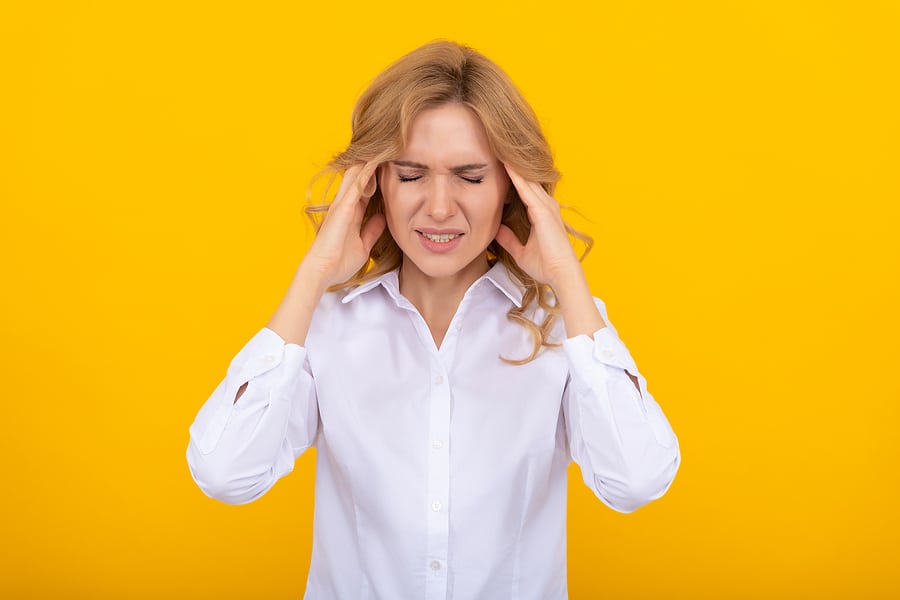
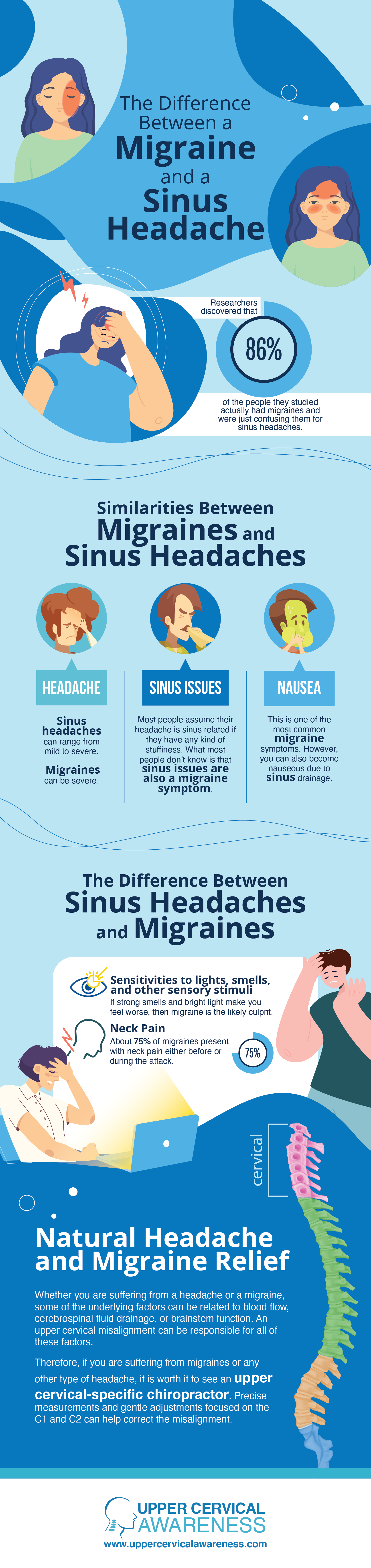
Living with recurring head pain can be confusing and frustrating—especially when migraine and sinus headaches feel similar but require very different approaches to treatment. In fact, research shows that about 86% of people who think they have sinus headaches are actually experiencing migraines, or a combination of migraine and sinus symptoms.
At Upper Cervical of Sioux Falls, we help patients understand the key differences between these conditions and find lasting relief through precision Blair upper cervical chiropractic care, not just band-aid symptom control.
Similarities Between Migraines and Sinus Headaches
Both migraines and sinus headaches can cause head discomfort and nausea, and this overlap often leads to misdiagnosis:
- Headache pain may be present in both conditions.
- Sinus symptoms like pressure or congestion can appear with headaches even when the root cause is migraine.
- Nausea commonly accompanies migraine attacks.
But while they may look alike on the surface, their underlying causes and best treatments differ significantly.
How Migraines Differ from Sinus Headaches
Symptoms and Sensory Sensitivities
Migraines are more than just bad headaches—they are a neurological condition often involving intense, throbbing pain, usually on one side of the head, and can include:
- Sensitivity to light (photophobia), sound (phonophobia), and smell (osmophobia)
- Nausea or vomiting
- Visual disturbances or aura before or during the attack
In contrast, sinus headaches are typically linked to sinus inflammation, often from allergies or infections, and usually involve pain or pressure around the forehead, cheeks, and behind the eyes.
Migraine Aura
About 20–25% of migraine sufferers experience an aura—visual or sensory disturbances like flashing lights, zigzag lines, blind spots, or tingling—before the headache begins.
Duration and Pain Pattern
Migraines may last from 4 to 72 hours or longer, with pain that worsens with physical activity, whereas sinus headaches often improve with sinus drainage or allergy treatment.
Common Migraine Triggers
While everyone’s experience is different, migraine attacks are often triggered by:
- Stress or emotional tension
- Sleep disruption or poor hydration
- Certain foods or alcohol
- Hormonal shifts
- Sensory overload (bright lights, loud sounds, strong smells)
Tracking your triggers with a headache diary can help identify patterns and inform a personalized care plan.
Why Migraine Attacks Happen
Migraines are not just simple headaches — they are a complex neurovascular disorder involving nerve pathways and brain chemical activity. In each migraine episode, changes in the brain’s pain pathways and blood vessel responses can stimulate pain signals through the trigeminal nerve system, leading to the characteristic intense head pain and sensory disturbance of a migraine.
Unlike sinus headaches, which are tied to inflammation in the sinus cavities, migraines arise from neurological changes and often require different approaches to diagnosis and care.
How Upper Cervical Chiropractic Can Help Migraine Sufferers
Traditional treatments for migraines often focus on medications to dull symptoms, but they don’t always address underlying causes.
At Upper Cervical of Sioux Falls, we take a different approach by correcting subtle misalignments in the upper cervical spine (the C1 and C2 vertebrae). These misalignments can interfere with nervous system communication — and because the nervous system plays a central role in how your head and brain function, restoring alignment can help reduce the frequency and severity of migraine attacks.
Our care is:
- Gentle and precise, using the Blair upper cervical technique.
- Designed to impact the root cause, not just mask symptoms.
- Focused on helping the body naturally regulate itself, improving overall nervous system function.
Signs Your Headache Might Be Migraine — Not Sinus
Here are red flags that suggest migraines rather than sinus headaches:
- One-sided, throbbing pain lasting several hours to days
- Sensitivity to light, sound, or smell
- Nausea or vomiting
- Visual disturbances (aura) before pain begins
- No relief from traditional sinus treatments or decongestants
If you regularly experience any of these symptoms, it may be worth evaluating whether migraine — not sinus pressure — is at the root of your discomfort.
FAQs About Migraine vs Sinus Headache
How can I tell if my headache is a migraine or a sinus headache?
Migraines typically include throbbing pain, sensory sensitivities, nausea, and possible aura — while sinus headaches present more localized pressure and congestion around the face.
Can sinus issues trigger migraine attacks?
Yes. Sinus inflammation and allergy reactions may act as triggers in people predisposed to migraines, making symptom tracking and proper diagnosis essential.
Will chiropractic care help migraine but not sinus pain?
Upper cervical chiropractic care aims to improve nervous system function, which may reduce migraine triggers and frequency. While it may not directly treat sinus inflammation, it can help with migraines often mistaken for sinus headaches.
Finding the Right Care
Migraines can be debilitating, but they don’t have to control your life. When frequent headaches go beyond occasional tension and resemble migraine patterns, seeking a targeted evaluation is key — especially when treatments focused only on symptoms haven’t brought lasting relief.
If you’re experiencing migraines, consider a consultation with Upper Cervical of Sioux Falls to explore how gentle, precise Blair upper cervical chiropractic care may help reduce your migraines and support your nervous system health — naturally.
Make sure you book your appointment ahead to avoid waiting in line by calling 605-275-6900 or using this form.
To schedule a complimentary consultation with Dr. Casey Weerheim call our Sioux Falls office at 605-275-6900. You can also click the button below.
 If you are outside of the local area, you can find an Upper Cervical Doctor near you at www.uppercervicalawareness.com.